

If you’re traveling by Shinkansen on the Tokaido or Sanyo Shinkansen, you’ll quickly come across three names: Nozomi, Hikari, and Kodama. They’re not different types of bullet trains, instead they’re different service categories that use the same Shinkansen network, with different stopping patterns and travel times.
The important part is knowing which one you should take. Nozomi is the fastest and most frequent, Hikari makes more stops but is covered by the standard Japan Rail Pass, and Kodama stops at every station along the Tokaido Shinkansen. Depending on your route, budget, and whether you’re using a JR Pass, that difference can save you time and/or money.
I know how confusing these service names can be when you’re planning your first Shinkansen journey, so in this guide I’m breaking down Nozomi vs Hikari vs Kodama, including speed, stops, prices, JR Pass coverage, and when each one makes the most sense. If you’re still figuring out how Shinkansen travel works in Japan, start with my complete Shinkansen guide for first-timers before diving into the comparison.
The quick answer
If you’re in a hurry, here it is:
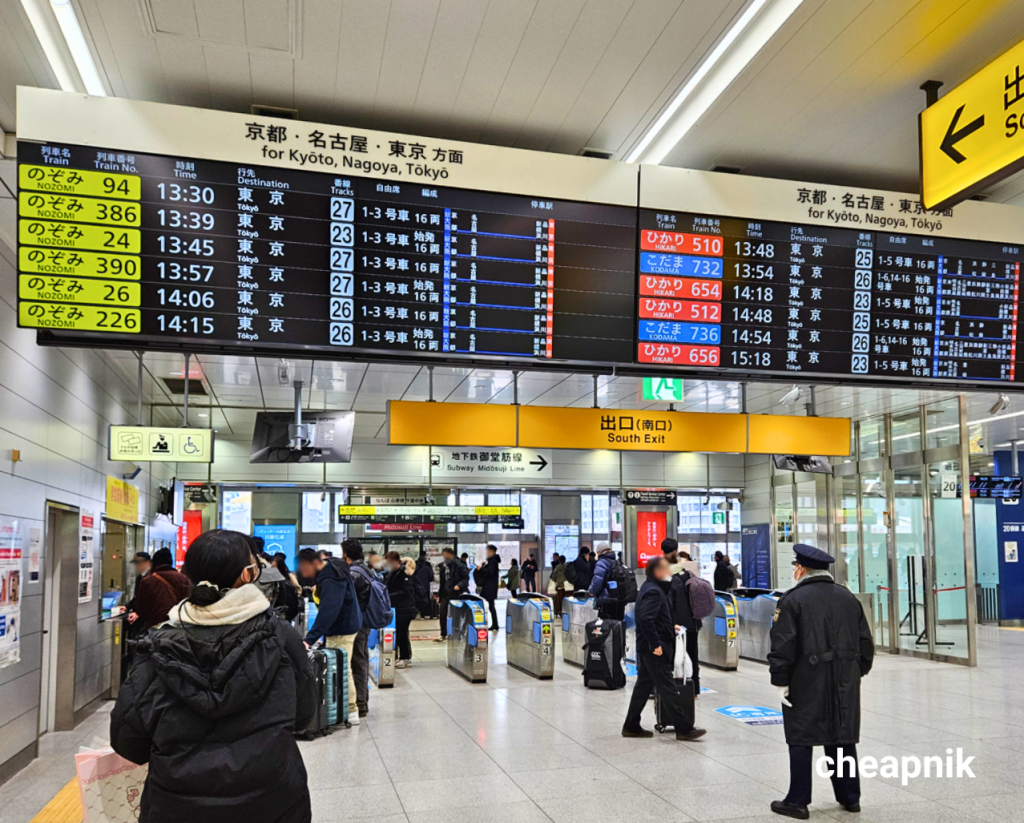
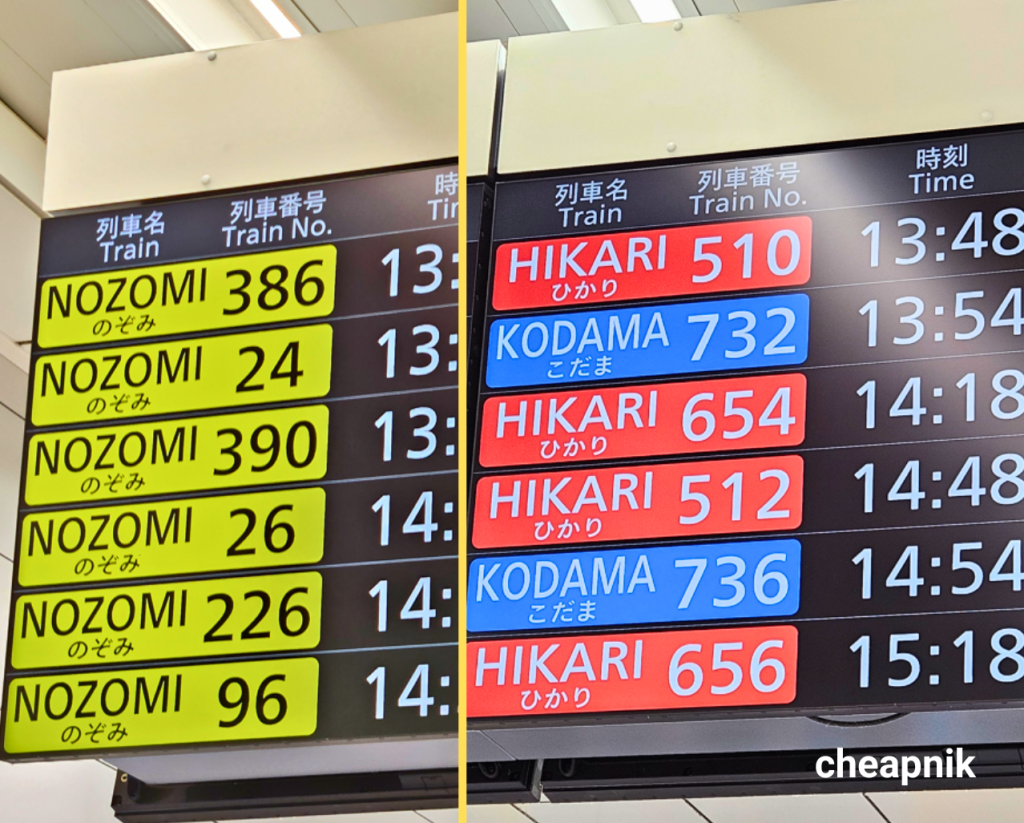
- Nozomi (のぞみ): Often shown in signages as yellow, Nozomi is the fastest, fewest stops, not covered by the standard JR Pass.
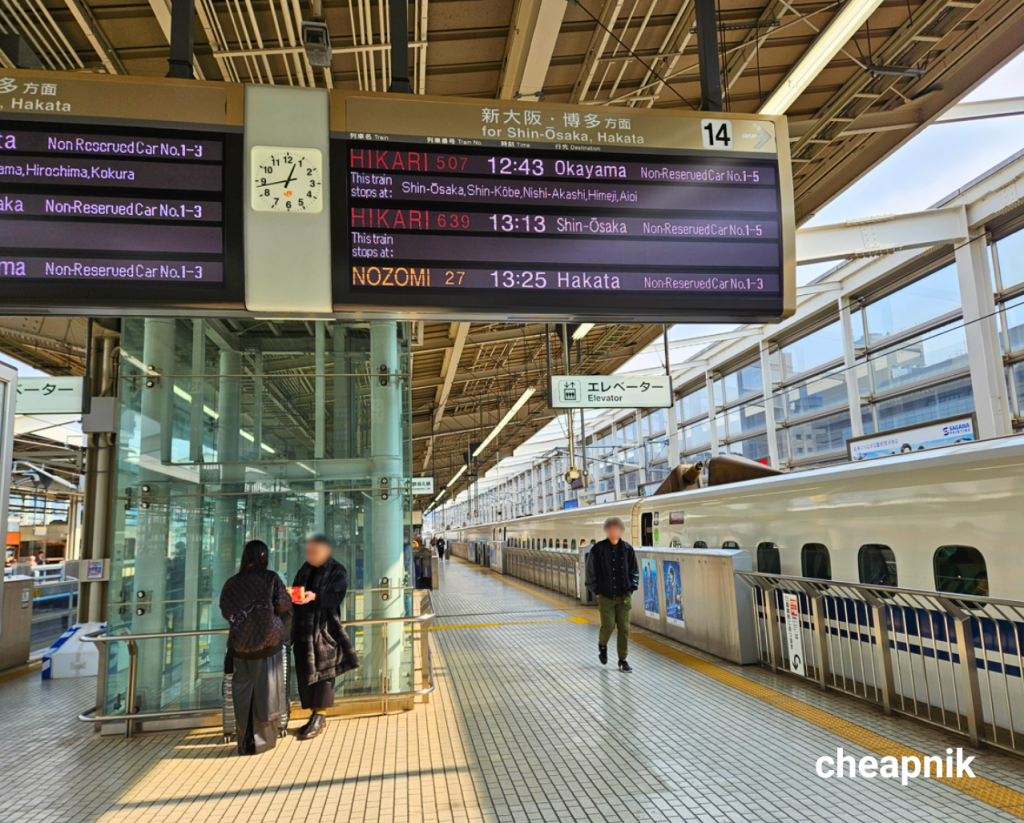
- Hikari (ひかり): Often shown in signages as red, Hikari is bit slower, a few more stops, fully covered by the JR Pass.
- Kodama(こだま): Often shown in signages as blue, Kodama stops everywhere, takes the longest, also fully covered by the JR Pass.
Everything below is the “why” behind that summary, plus the one seasonal rule that trips up more travelers than anything else on this list.
Where these three actually run
Nozomi, Hikari, and Kodama are service categories on the Tokaido Shinkansen, which runs between Tokyo and Shin-Osaka, and the Sanyo Shinkansen, which continues from Shin-Osaka to Hakata.
They’re not separate train lines. They’re different stopping patterns using the same Shinkansen corridor and largely the same N700-series trains. The onboard experience is also very similar. You’ll find the same basic types of seating and amenities, although the exact train configuration can vary.
The biggest differences are how many stations each service stops at, how long the journey takes, how frequently the trains run, and whether your JR Pass covers the service.
Nozomi (のぞみ): the one to take when time matters
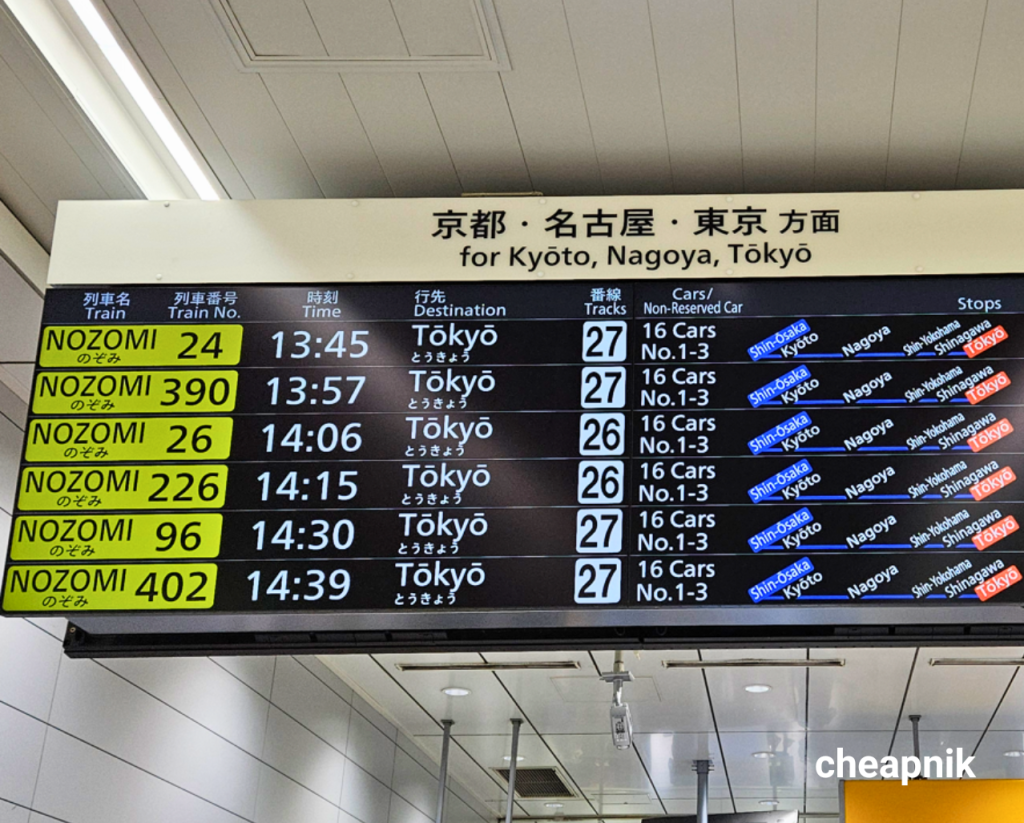
Nozomi is the fastest of the three, and it shows. Tokyo to Shin-Osaka takes about 2 hours and 30 minutes (full breakdown of that route in my Tokyo-Osaka guide), stopping only at major hubs like Shinagawa, Nagoya, and Kyoto before arriving. On the Sanyo extension it continues on to Shin-Kobe, Okayama, Hiroshima, and Hakata, again skipping most of the smaller stations along the way.
It’s also the most frequent service on the line, departing roughly every ten minutes during peak travel windows, which makes it the easiest one to just show up and catch.
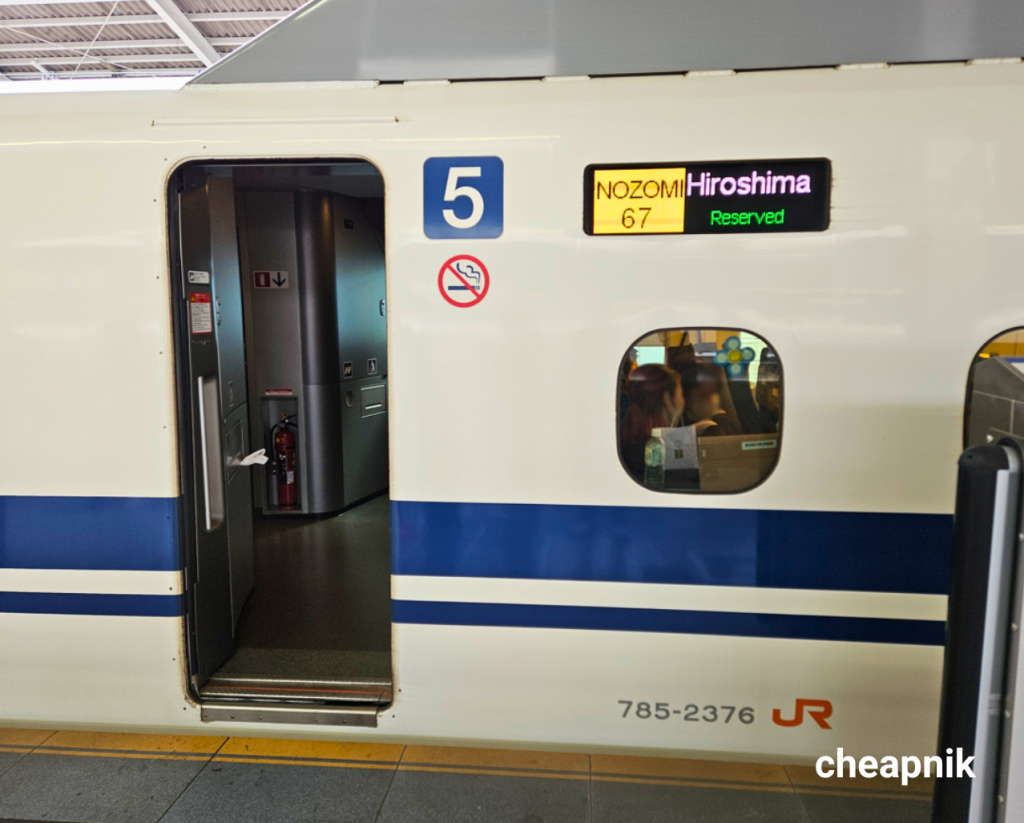
Here’s the part that catches people off guard: the standard JR Pass does not cover Nozomi. If your only ticket is the pass, you can still ride it, but you’ll need to buy a specific Nozomi/Mizuho supplement ticket to do so, priced by distance (a Tokyo-Kyoto supplement runs somewhere in the ballpark of a few thousand yen, I’ve got the exact figure in my Tokyo-Kyoto route guide and the full pass math in my JR Pass guide). Board without it and you’ll be asked to pay the difference on board.
For travelers paying per ticket rather than using a pass, Nozomi’s fare is only marginally higher than Hikari or Kodama for the same route, so the speed usually isn’t costing you much extra.
Hikari (ひかり): the practical middle ground
Consider riding the Hikari first, especially if a JR Pass is part of the plan. It stops at a handful of additional stations beyond what Nozomi covers, which adds somewhere around 20 to 30 minutes to a Tokyo-Kyoto or Tokyo-Shin-Osaka run.
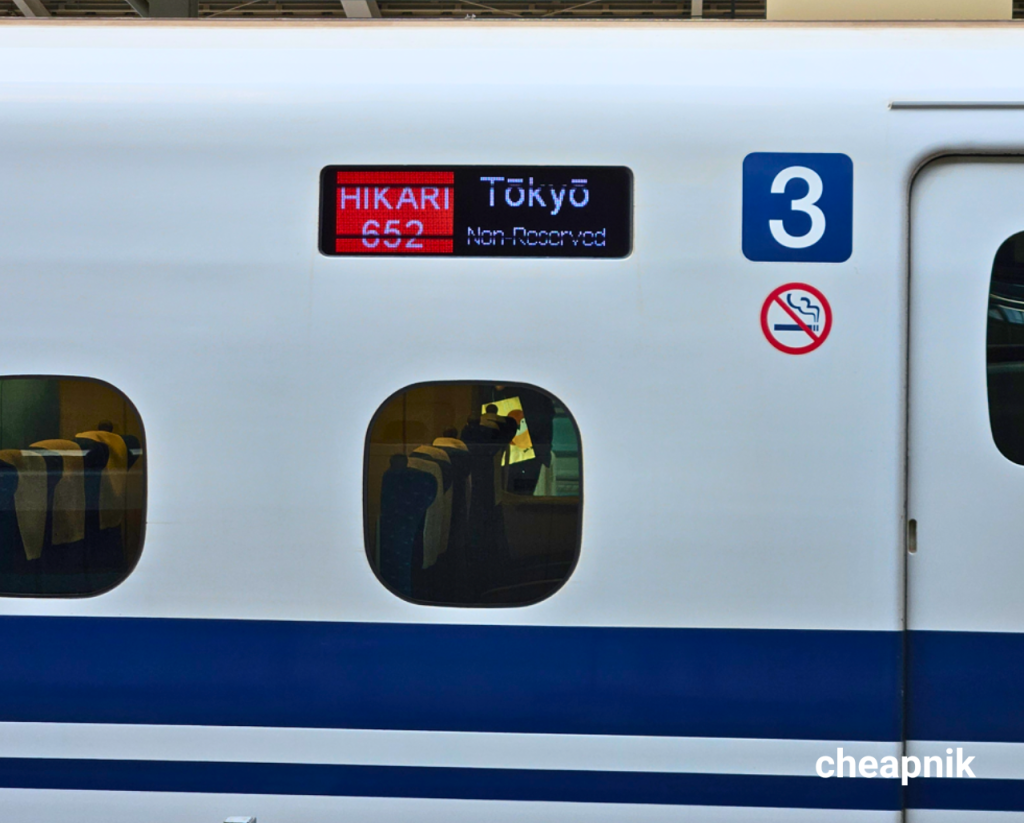
That’s really the whole tradeoff: a bit more time, in exchange for being fully covered by the JR Pass with no supplement needed, and a fare that’s roughly on par with (sometimes very slightly cheaper than) Nozomi if you’re buying individual tickets.
The catch is frequency. Hikari runs far less often than Nozomi, often only a couple of times per hour, so missing one can mean a real wait for the next departure. If you’re not in a rush and don’t mind checking a timetable before you leave your hotel, it’s a genuinely good default.
Kodama(こだま): the local, and the one nobody takes by accident
Kodama stops at every single station on the line, all of them, which is exactly why it’s the slowest of the three. The same Tokyo to Shin-Osaka trip that takes Nozomi 2.5 hours takes Kodama closer to 4.
Nobody rides Kodama end to end from Tokyo to Osaka unless they specifically want to. Where it earns its keep is short hops between smaller stations, like Atami, Odawara, or Kakegawa, that the faster services skip entirely. It’s also fully covered by the JR Pass, has the most non-reserved seating of the three, and tends to be noticeably emptier and quieter than a Nozomi at rush hour.
One quirk worth knowing: Kodama trains frequently pull into a station and simply wait several minutes to let a faster Nozomi or Hikari pass by. It’s not a delay, it’s just how the schedule is built, and it’s part of why the ride takes as long as it does.
Side by side
| Nozomi (のぞみ) | Hikari (ひかり) | Kodama(こだま) | |
|---|---|---|---|
| Tokyo–Shin-Osaka time | ~2h30m | ~2h50m–3h | ~4h |
| Stops | Fewest (major hubs only) | Moderate | Every station |
| Frequency | Highest (every ~10 min at peak) | Lower (a couple times/hour) | Moderate, fills local gaps |
| JR Pass coverage | Not included (supplement required) | Fully included | Fully included |
| Best for | Speed, business travel | Most tourists, JR Pass holders | Small-town stops, quiet rides |
The peak-season rule that changes everything
Since 2023, Nozomi trains run reserved-seat-only during Japan’s three major holiday periods, Golden Week (late April into early May), Obon (mid-August), and the New Year holidays (roughly December 26 to January 4). During those windows, there’s no non-reserved Nozomi seating at all. If you don’t have a reserved seat booked, you don’t board.
Hikari and Kodama are unaffected by this and continue offering non-reserved seating even during those same peak periods. So if you’re traveling during one of those windows and haven’t locked in a Nozomi reservation, Hikari or Kodama might genuinely be the smoother option, not just the cheaper one.
Which one should you actually book?
Here’s how I’d match the train to the trip:
- You’re short on time and paying per ticket: Nozomi. The fare difference is small and the time saved is real.
- You’re using a JR Pass and don’t want to pay a supplement: Hikari, checked against the timetable so you’re not waiting around for the next one.
- You’re heading somewhere smaller that Nozomi and Hikari skip: Kodama is your only real option, and it’s not a bad ride.
- You’re traveling during Golden Week, Obon, or New Year and don’t have a Nozomi reservation: Hikari or Kodama, since they’ll still have non-reserved seats when Nozomi won’t.
- You just want a quiet, cheap, unhurried ride and have time to spare: Kodama, book in advance if you want the discounted fares that sometimes come with it.
None of these three are the “wrong” choice, they’re built for different situations. Nozomi is for speed and works best if you’re paying per ticket. Hikari is the sensible default for most JR Pass holders. Kodama is for small-town stops or a slower, cheaper, quieter ride when you’ve got the time. Once you know which category your trip actually falls into, picking the right train takes about five seconds on the timetable.
Once you’ve picked your train, the next decision is which seat class to book inside it. All three offer Ordinary and Green Car seating; Gran Class isn’t an option on any of them, it’s specific to JR East’s Tohoku, Hokkaido, Joetsu, and Hokuriku lines. Check out the full comparison of what Ordinary and Green Car actually get you in my Shinkansen seat classes guide. If you’re looking to get your Shinkansen tickets, first check out my blog post on how to buy shinkansen tickets to see what your options are and the comparison for each.
Travel information above may change at any time. Confirm current details before booking.


