

The JR Pass isn’t the only rail pass in Japan, and treating it as the default can cost unnecessary travel spending. There are also regional passes for Hokkaido, Kansai, Kyushu, and half a dozen other areas, each priced and scoped for travelers staying inside that region rather than crossing the whole country. Some overlap, some cover the Shinkansen (Japan’s bullet train) and some don’t, and figuring out which is which isn’t obvious from JR’s own naming alone.
So here’s the region-by-region breakdown of what’s actually available, and when a regional pass genuinely beats the nationwide one.
If you haven’t already, it’s worth reading my Shinkansen lines and routes guide first so the geography makes sense, and my nationwide JR Pass guide if you’re still deciding between the nationwide pass and a regional one. This post is also one piece of my complete Shinkansen guide for first-timers, if you want the full trip-planning picture.
TL;DR
- Staying inside one region almost always beats the nationwide JR Pass on price, and several regional passes even cover Nozomi and Mizuho, which the nationwide pass excludes.
- JR West’s territory (Kansai, Hiroshima, Sanyo, San’in) has the most pass options of any region, and is where a regional pass is most likely to outright beat the nationwide pass.
- The Hokuriku Arch Pass is the one to know if you want to see Kanazawa without backtracking through the standard Tokyo-Kyoto-Osaka route.
- A handful of passes are genuinely niche (single sub-regions, narrow prefecture pairs), worth knowing exist but not worth reading in depth unless your trip specifically needs one.
- Prices shift often, so check the linked listings for current pricing before you book.
What a “regional pass” actually is
Each JR company (there are six: JR Hokkaido, JR East, JR Central, JR West, JR Shikoku, and JR Kyushu) sells its own passes that only work within its own territory, plus sometimes a bit of overlap into a neighboring company’s tracks. Unlike the nationwide JR Pass, these are priced and scoped for people who are staying in one part of the country rather than crossing the whole thing.
The upside is real: regional passes are almost always cheaper than the nationwide pass, and several of them include the fastest Shinkansen services (Nozomi and Mizuho), which the nationwide pass excludes. The tradeoff is obvious too. Step outside the pass’s coverage area and you’re paying out of pocket.
How to pick the right one
Before you look at any specific pass, answer this: is your trip staying inside one region, or are you crossing the country?
- Staying in one region (just Kansai, just Kyushu, just Hokkaido): a regional pass almost always wins on price.
- Crossing multiple regions in a short window (Tokyo to Kyoto to Hiroshima in under two weeks): the nationwide pass or a cross-region pass is usually the better call.
- Slow, single-base travel (staying in Osaka and day-tripping): you might not need any pass at all. Point-to-point tickets or an IC card can beat both options, and I’d genuinely check that math before assuming a pass is automatically cheaper.
The list below covers the passes that fit most trips. If your itinerary is unusually specific, there’s a shorter list of narrower, situational passes further down that might fit better.
The passes most trips actually need
Pass names below link to their Klook listing for current pricing.
| Pass | Region | Day Options | Shinkansen Included |
|---|---|---|---|
| JR Hokkaido Rail Pass | Hokkaido | 5, 7, or 10 consecutive days | No (conventional/limited express only) |
| JR East–South Hokkaido Pass | Tokyo–Hokkaido | 6 consecutive days | Yes, via Seikan Tunnel |
| JR East Pass | Tokyo, Tohoku, Nagano/Niigata | 5 or 10 days | Yes |
| JR Tokyo Wide Pass | Greater Tokyo | 3 days | Yes (regional) |
| Takayama-Hokuriku Area Tourist Pass | Nagoya–Osaka via Takayama | 5 days | Partial |
| Kansai Area Pass | Kyoto, Osaka, Kobe, Nara, Himeji | 1–4 days | No |
| Kansai Wide Area Pass | Kansai + Okayama, Tottori | 5 days | Yes (to Okayama) |
| Kansai-Hiroshima Area Pass | Kansai–Hiroshima | 5 days | Yes, including Nozomi/Mizuho |
| Sanyo-San’in Area Pass | Kansai–Fukuoka + San’in coast | 7 days | Yes, including Nozomi/Mizuho |
| JR-WEST All Area Pass | All of JR West’s territory | 7 days | Yes |
| Kyushu Rail Pass | Kyushu (all/north/south tiers) | 3, 5, or 7 days depending on tier (Southern tops out at 3) | Yes |
| All Shikoku Rail Pass | Shikoku | 3, 4, 5, or 7 days | No (none exists on Shikoku) |
| Hokuriku Arch Pass | Tokyo–Osaka via Kanazawa | 7 days | Yes (Hokuriku Shinkansen only) |
| Japan Rail Pass (nationwide) | All of Japan | 7, 14, or 21 days | Yes, except Nozomi/Mizuho (ridable with a separate supplement ticket) |
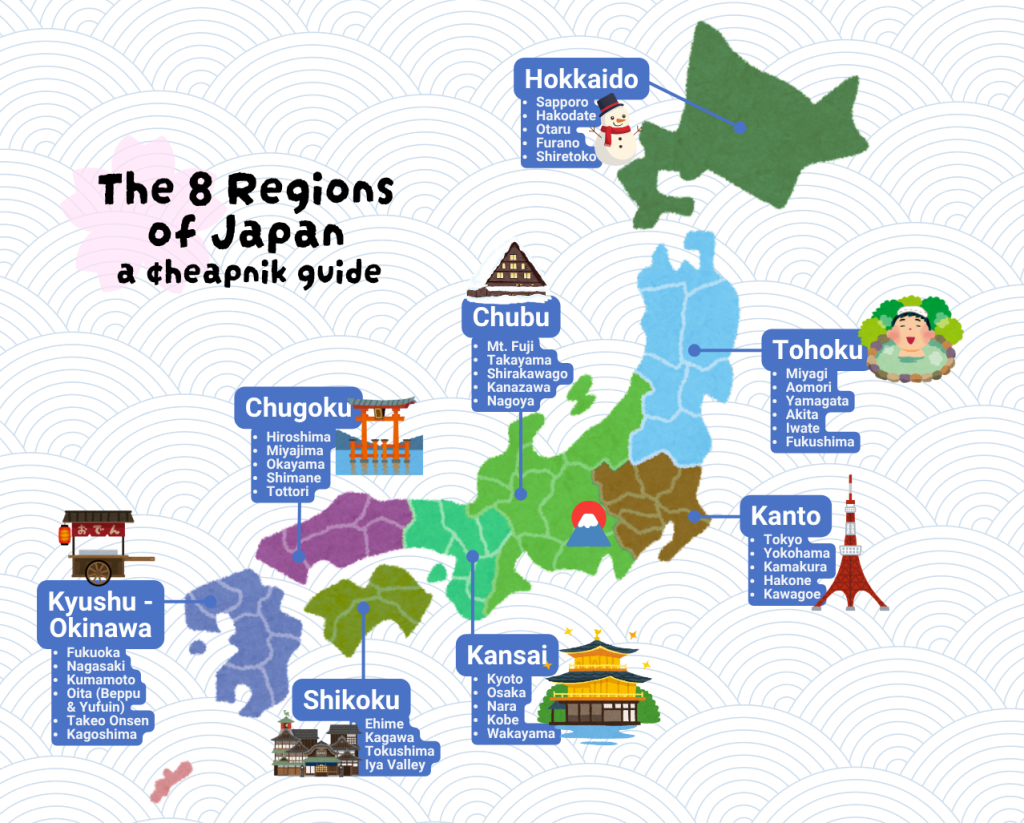
Hokkaido
Hokkaido is big, and distances between cities are long enough that a pass usually pays for itself fast.
JR Hokkaido Rail Pass: Covers JR Hokkaido’s conventional and limited express lines across the island, sold in 5, 7, or 10 consecutive-day options. It does not cover the Hokkaido Shinkansen at all, so if you’re arriving from Tokyo via Shinkansen, that leg is separate. If your trip covers the whole island, this is the one to get.
JR East–South Hokkaido Pass: A 6-consecutive-day pass that bridges Tokyo and southern Hokkaido, including the Shinkansen crossing through the Seikan Tunnel to Hakodate. This is the one to grab if your route is Tokyo-to-Hokkaido rather than Hokkaido-only, and honestly the one I’d default to over booking the Tokyo-Hakodate leg separately.
Tokyo, Tohoku, and eastern Japan
JR East Pass: JR East consolidated several of its older passes into this single pass covering greater Tokyo, the Tohoku region, and the Nagano/Niigata area on one ticket, which simplifies things if your route touches Sendai, Akita, Aomori, Nikko, and the Japanese Alps in the same trip.
JR Tokyo Wide Pass: A short 3-day pass for day trips out of Tokyo. Great for Nikko, Karuizawa, and the Mount Fuji area without committing to a longer pass, and the one I’d point a first-timer toward if Tokyo is their whole trip and they just want a couple of easy escapes.
Nagoya to Osaka Alpine Route (Takayama, Shirakawago, Kanazawa)
Takayama-Hokuriku Area Tourist Pass: Nagoya to Osaka via Takayama, Shirakawago, and Kanazawa, with bus transport to Shirakawago included. One of my favorite regional passes because it stitches together a route most tourists do piecemeal.
Kansai and western Honshu (JR West)
This is the region with the most pass options, because JR West’s territory is so large and popular. Roughly in order of coverage size:
- Kansai Area Pass: The entry-level option, covering Kyoto, Osaka, Kobe, Nara, and Himeji on local and rapid trains. No Shinkansen included, but it’s cheap and ideal for a short, city-focused stay.
- Kansai Wide Area Pass: Expands the above to include Shinkansen access out to Okayama, plus Kinosaki Onsen and Tottori.
- Kansai-Hiroshima Area Pass: Extends west along the Sanyo Shinkansen as far as Hiroshima, and unlike the nationwide pass, this one does cover Nozomi and Mizuho within its zone (just not the Tokaido Shinkansen between Kyoto and Osaka). Worth knowing what that actually saves you if you’re weighing it against Hikari, covered in my Nozomi vs Hikari vs Kodama guide. It also throws in the JR ferry to Miyajima, which is a nice touch if that’s on your list, and this is probably my favorite pick in the whole Kansai lineup for exactly that reason.
- Sanyo-San’in Area Pass: Covers the Sanyo Shinkansen corridor plus the San’in coast (Matsue, Tottori, Hagi), with the unusual bonus of free seat reservations on Shinkansen and limited express trains in the zone (up to nine reservations through the online booking system).
- JR-WEST All Area Pass: The broadest JR West option, combining Kansai, Hokuriku, Sanyo, and San’in into one ticket for travelers moving through all of it in a single trip.
If Kyoto, Osaka, and Hiroshima are your main stops, this is the region where a regional pass is most likely to beat the nationwide JR Pass outright.
Kyushu
Kyushu Rail Pass: Sold in a few configurations (all of Kyushu, or just the northern or southern half), covering JR Kyushu’s Shinkansen and limited express network. If you’re flying into Fukuoka and working your way down to Kumamoto, Beppu, or Kagoshima, this is usually a clear win over paying per ticket, and I rarely see a Kyushu itinerary where it doesn’t pay for itself.
Shikoku
All Shikoku Rail Pass: Covers the whole island, including private railways and city trams in some areas. Shikoku has no Shinkansen service at all, so this pass is about conventional and limited express trains, plus the convenience of one ticket for the whole loop.
Crossing regions: the Hokuriku Arch Pass
Worth a special mention because it doesn’t fit neatly into one company’s territory. The Hokuriku Arch Pass covers the route between Tokyo and Osaka via the Sea of Japan coast, taking in Kanazawa along the way. It’s a joint product between JR East and JR West (JR Central’s territory, the Tokaido Shinkansen, isn’t part of this route at all), and it’s a smart pick if you want to see Kanazawa without backtracking through the standard Tokyo-Kyoto-Osaka line. I think it’s one of the most underused passes on this list, most travelers never even hear the Sea of Japan route is an option.
Niche passes worth knowing about
These cover narrower trips, only worth a look if your itinerary specifically needs one:
- Sapporo-Furano Area Pass (4 days): Covers Sapporo, New Chitose Airport, Otaru, Asahikawa, and out to Furano and Biei’s lavender fields, cheaper than the full Hokkaido Rail Pass if your trip stays in that pocket.
- Sapporo-Noboribetsu Area Pass (4 days): Same idea, different direction, covers Sapporo, New Chitose Airport, Otaru, and down to the Noboribetsu onsen area.
- JR Tohoku–South Hokkaido Pass (6 days): For skipping Tokyo entirely and starting your trip further north, linking Tohoku cities like Sendai with Hakodate.
- Mt Fuji-Shizuoka Area Tourist Pass Mini (3 days): Covers Shizuoka and the southern approach to Mount Fuji.
- Ise-Kumano-Wakayama Area Tourist Pass (5 days): For the Kumano Kodo and Ise Jingu, in the Kii Peninsula.
- Alpine-Takayama-Matsumoto Area Tourist Pass (5 days): For the Tateyama Kurobe Alpine Route.
- Kansai-Hokuriku Area Pass: Kansai up to Kanazawa, overlaps heavily with the Hokuriku Arch Pass, so compare both against your exact route.
- Sanyo-San’in Northern Kyushu Pass: An extension of the Sanyo-San’in Area Pass further south into northern Kyushu, adding Nagasaki, Kumamoto, Beppu, and Yufuin.
JR West also sells a handful of even narrower, prefecture-pair passes beyond this list, Hiroshima-Yamaguchi, Okayama-Hiroshima-Yamaguchi, Setouchi, and a few others. If your trip is that specific, it’s worth a quick search for a pass matching your exact two cities.
How regional passes differ from the nationwide JR Pass
A few structural differences worth knowing before you buy:
- Nozomi and Mizuho access varies. The nationwide pass doesn’t include them by default, though holders can still ride either by buying a separate special ticket at the gate. Several regional passes, like the Kansai-Hiroshima Area Pass, include them within their coverage zone with no extra ticket needed.
- Seat reservations aren’t always free. Some regional passes only cover non-reserved seating or charge separately for reservations, while the nationwide pass includes free reservations everywhere it’s valid. The Sanyo-San’in Area Pass is a notable exception that includes free reservations.
- Eligibility is usually the same. Most regional passes, like the nationwide pass, require a Temporary Visitor visa stamp.
- Boundaries are strict. Cross out of a regional pass’s coverage area and you’ll need a separate ticket for that leg.
Common mistakes worth avoiding
- Buying the nationwide pass out of habit when your whole trip actually sits inside one region.
- Assuming every regional pass includes the Shinkansen. Several, like the base Kansai Area Pass, don’t.
- Not checking whether reservations are included, then getting stuck paying separately on a busy travel day.
- Forgetting that some passes (Hokkaido, Kyushu) come in different area tiers (north-only, south-only, all-island), and picking the wrong tier for your actual route.
Frequently asked questions
Are regional passes cheaper than the nationwide JR Pass?
Usually, if your trip stays inside one region. A regional pass is priced and scoped for that smaller territory, so it’s rarely worth buying if you’re also crossing into other parts of the country, that’s when the nationwide pass or a cross-region option like the Hokuriku Arch Pass tends to win instead.
Do regional passes cover the Shinkansen?
It depends on the pass, not all of them do. The Kansai Area Pass, for example, doesn’t include any Shinkansen, while the Kansai-Hiroshima and Sanyo-San’in passes include it along with Nozomi and Mizuho, which the nationwide pass doesn’t include by default (though nationwide pass holders can still ride either by buying a separate special ticket at the gate). Check the table above for each pass’s coverage before assuming either way.
Can Japanese residents buy regional passes?
No. Regional passes are built for international visitors, and eligibility generally requires a Temporary Visitor visa stamp on entry, the same requirement as the nationwide JR Pass. Japanese nationals aren’t eligible to use them.
Do I need to reserve seats separately, or is that included?
Varies by pass. Some, like the Sanyo-San’in Area Pass, include free seat reservations. Others only cover non-reserved seating or charge extra for a reservation. Worth checking before a busy travel day, since getting this wrong can mean standing room only.
Can I combine a regional pass with the nationwide JR Pass on the same trip?
Not for overlapping dates or the same leg, but there’s nothing stopping you from using a regional pass for one part of your itinerary and switching to point-to-point tickets, a different regional pass, or the nationwide pass for another part, as long as the validity periods don’t overlap.
What happens if I travel outside my pass’s coverage area?
You’ll need a separate ticket for that leg. Regional pass boundaries are strict, there’s no partial coverage or discount once you’re outside the zone.
Once you’ve settled on a pass, the next question is usually how to actually use it to book a seat. My guide to buying Shinkansen tickets covers reservations at stations and online, including which channels work with a regional pass.
Pass names, coverage areas, inclusions, and other details may change, and JR companies do revise pricing and terms periodically. Always confirm current details on the relevant JR company’s official site before getting a pass.


