

Boarding the Shinkansen for the first time can feel more complicated than it actually is. Japan’s major stations are huge, the platforms can be busy, and your ticket contains several numbers and codes that aren’t immediately obvious if you’ve never used the bullet train before.
The good news is that boarding a Shinkansen follows a fairly simple routine: check your train and car number, find the right platform, locate your car’s stopping marker, join the queue, and board when the doors open. Once you know what to look for, the whole process becomes surprisingly straightforward.
In this guide, I’ll walk you through exactly how to board the Shinkansen in Japan, from reading your ticket and finding the correct platform to locating your seat, handling luggage, and knowing what to do if you’re running late. If you’re still planning the rest of your journey, my complete Shinkansen guide for first-timers covers the bigger picture, including routes, tickets, and choosing the right train.
Why knowing the drill matters
A few realities make platform navigation worth understanding before you travel, not while you’re standing there panicking:
- Dwell times are short. Many Shinkansen stops last only a minute or two. There’s no leisurely stroll down the platform once the doors open.
- Big stations are genuinely big. Shin-Osaka’s Shinkansen platforms sit on a separate floor from the ticket gates, and Tokyo Station splits its Shinkansen platforms across more than half a dozen tracks depending on which line you’re taking.
- Doors don’t line up randomly. Each car stops at a specific, marked spot on the platform, and knowing yours in advance is what saves you the sprint.
None of it is hard once you know the sequence. It’s just unfamiliar the first time.
Step 1: Read your ticket before you get to the platform
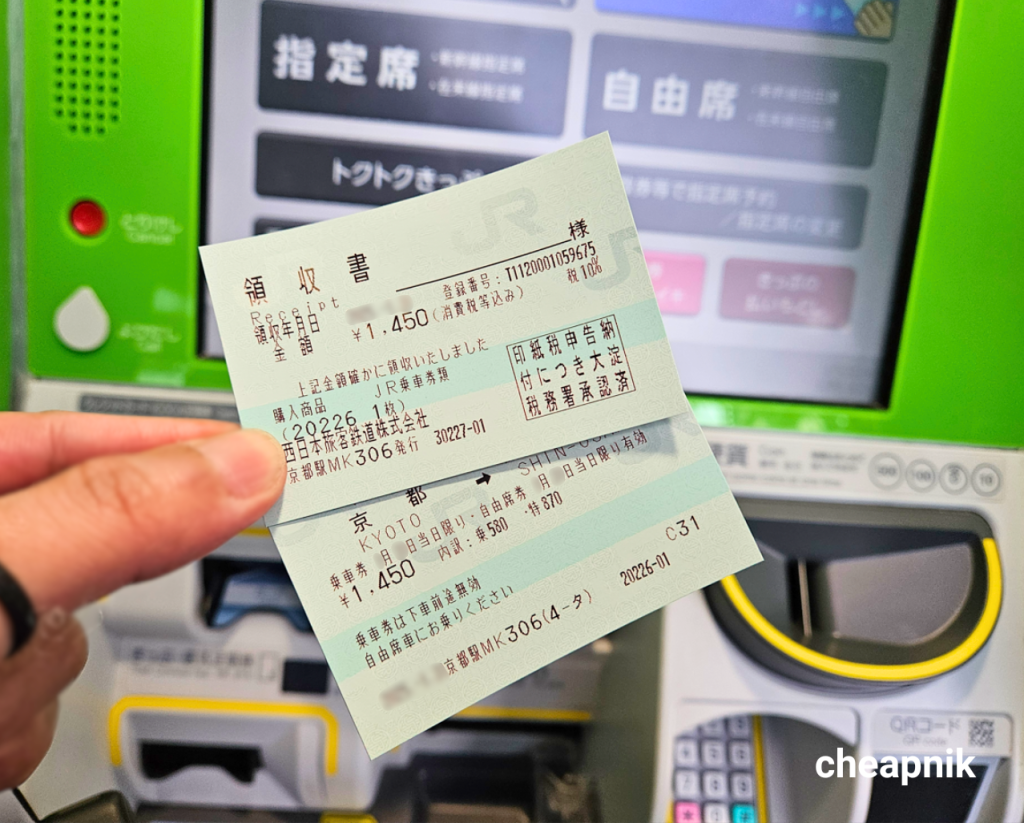
Your ticket (or QR code, or linked IC card reservation) carries three pieces of information you’ll need, and it’s worth checking all these before you’re standing on a crowded platform trying to read them for the first time:
- Departure Date and Time
- Destination
- Train name and number (like Nozomi 25), since multiple trains head in the same general direction and you need the exact one.
- Car number (shown as 号車, “-gousha”), which tells you where to stand on the platform.
- Seat number, if you’ve got a reserved seat.
If your ticket says “自由席” (jiyuseki), that means unreserved seating, you don’t have an assigned seat, just a general car type to board.
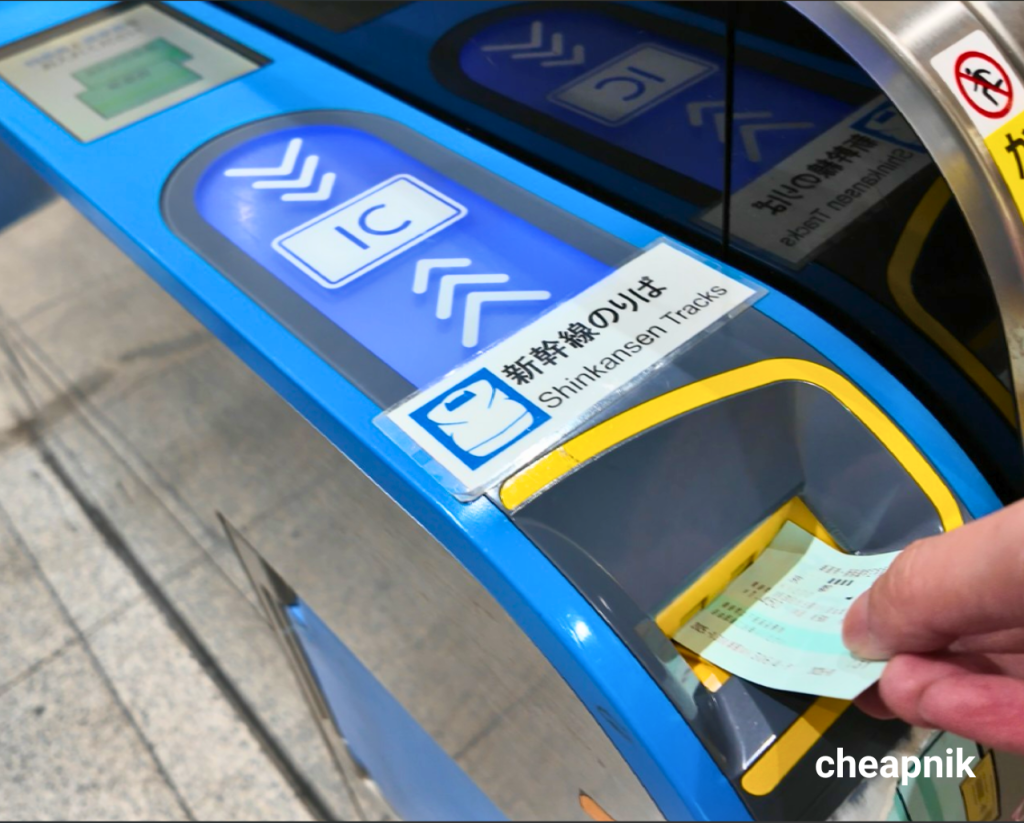
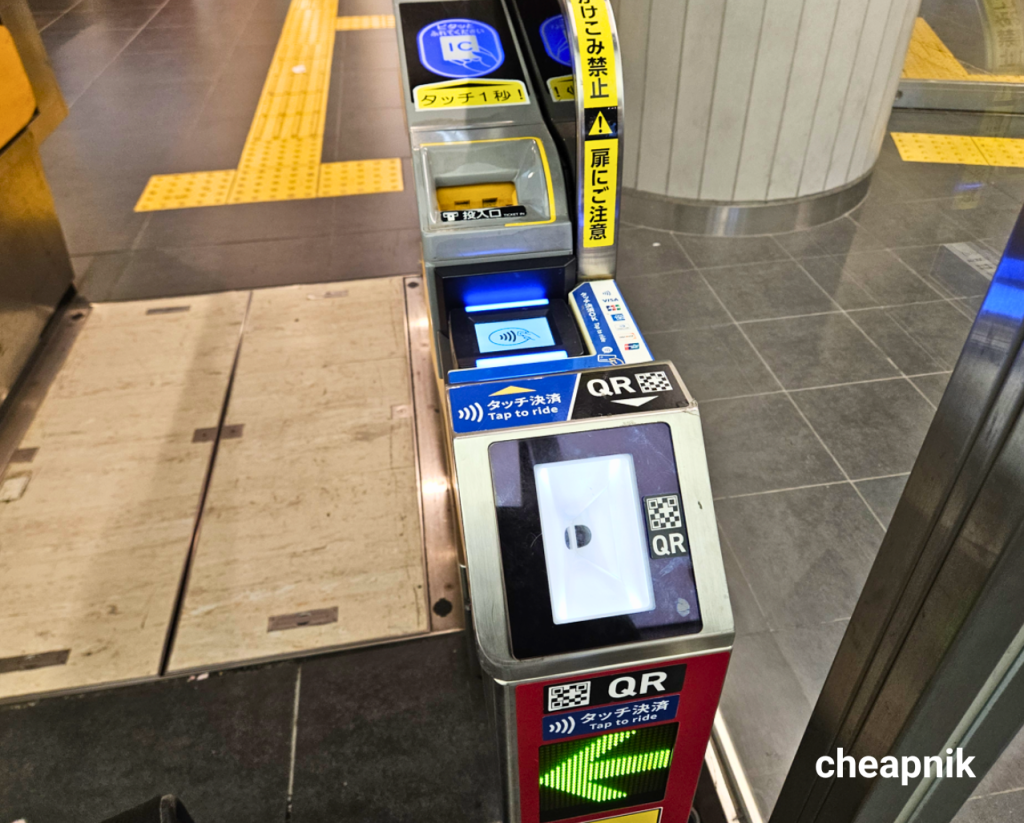
Step 2: Find your platform using the departure board
After passing through the ticket gate, look for the large electronic departure board. It’ll show your train’s departure time, platform number, and which stations it stops at. At major hubs like Tokyo Station, different train types are often color-coded on these boards, Nozomi in yellow, Hikari in red, Kodama in blue, which makes it easier to confirm you’re looking at the right one at a glance.
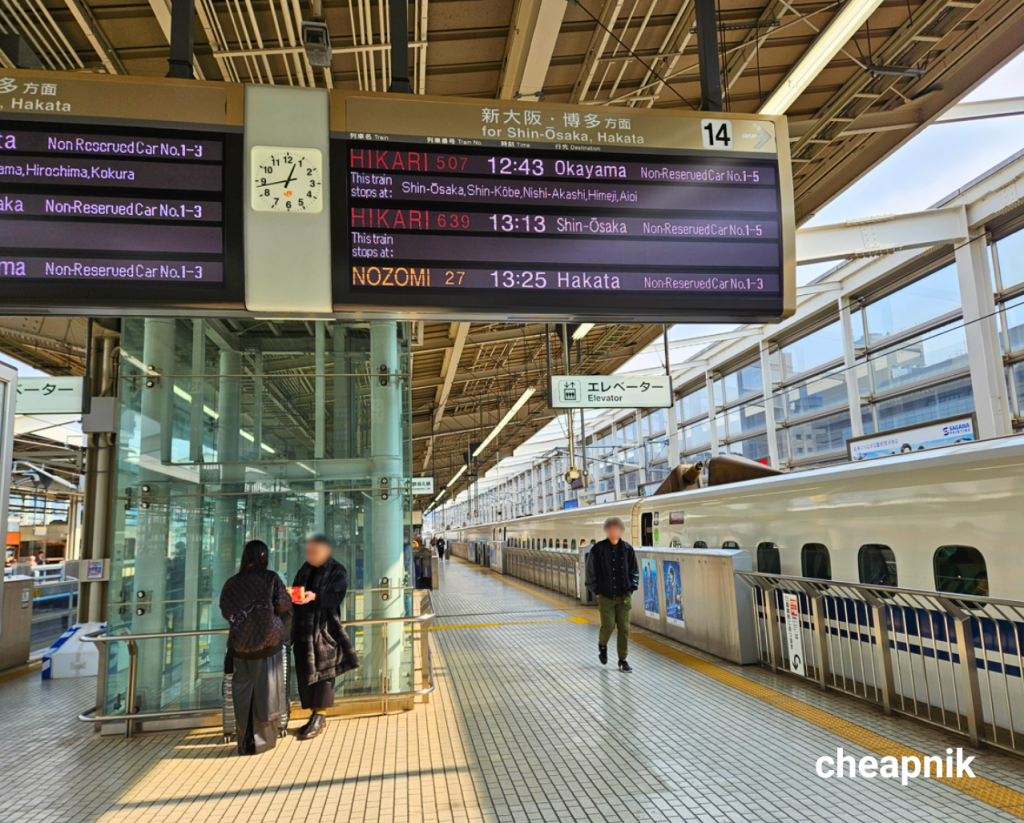
At bigger stations, Shinkansen platforms are often grouped by which lines they serve. Tokyo Station, for instance, splits its platforms between the Tokaido/Sanyo lines on one set of tracks and the Tohoku/Joetsu/Hokuriku lines on another. Double-check you’re heading toward the right platform group before you start walking, since going the wrong direction inside a station this size costs real time.
Step 3: Give yourself more time than feels necessary
Aim to reach your platform 10 to 15 minutes before departure, especially at large stations like Tokyo, Shin-Osaka, or Shinagawa. These platforms are long, and if your car is toward one end, you might be walking further than you’d expect. This buffer also gives you room to double-check the platform floor markers before the train arrives, rather than while it’s already pulling in.
Step 4: Find your car’s exact stopping position
This is the detail that trips up the most first-timers. Look down at the platform floor, or up at the overhead signs, and you’ll see numbered markers showing exactly where each car will stop when the train arrives. Find the marker matching your car number and stand behind it.
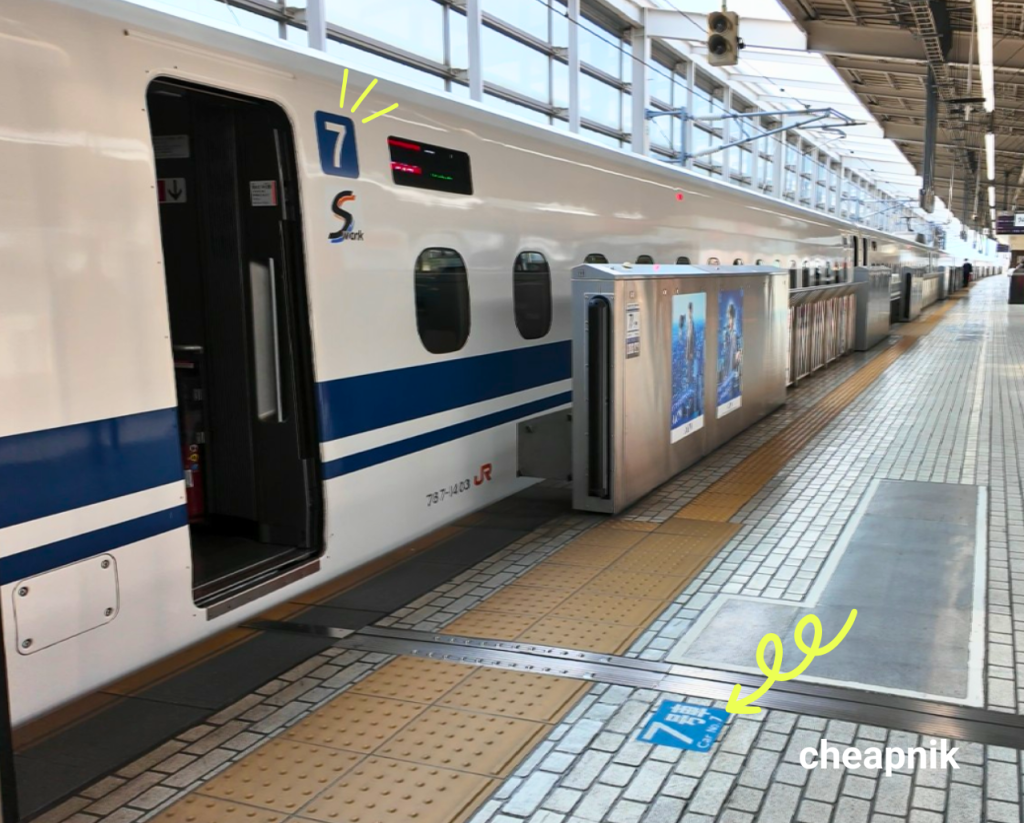
A couple of things worth knowing here:
- Non-reserved cars are usually positioned toward one end of the train (often the front), but this varies by train type and route, so confirm against the platform signage or departure board rather than assuming.
- The same platform can serve different train types at different times, and car positions can shift slightly depending on the train’s length and configuration. If in doubt, the platform display or a quick glance at the car number painted on the side of the arriving train will confirm you’re in the right spot.
- There’s already a line. Japanese queuing culture is real and it works, join the back of the line at your marker rather than clustering around it.
Step 5: Boarding, without the scramble
When the train pulls in, the car number and train name will be clearly displayed on the outside of each car. Doors open automatically.
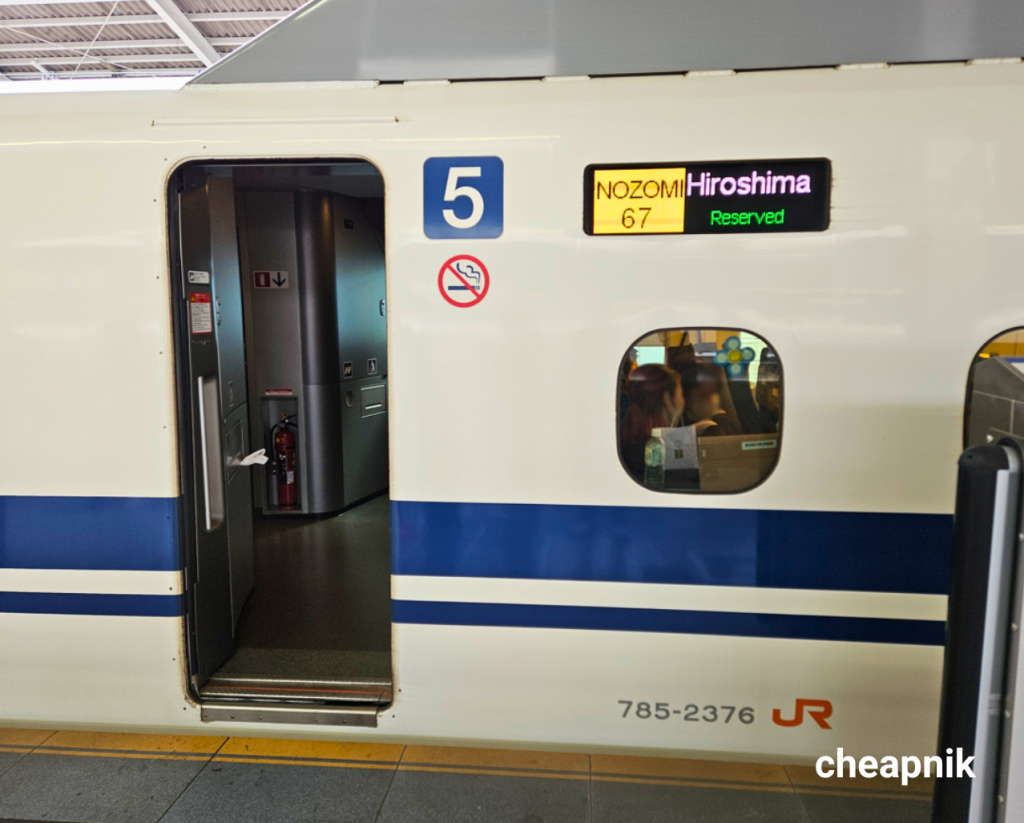
The sequence from here is simple and consistent:
- Let passengers exit first. Step aside and let the car empty out before you board, this isn’t just politeness, it’s also faster overall.
- Board in order, following the line you joined.
- Move in quickly. With dwell times this short, lingering in the doorway to find your seat holds up everyone behind you. Get in, then sort out your seat and luggage.
- Stow your bag as you go. Overhead racks work for smaller bags; anything larger goes at your feet or, if you’ve booked one, in the oversized luggage area behind the last row of seats (full sizing rules in my Shinkansen luggage guide).
Once you’re seated: the etiquette that actually matters
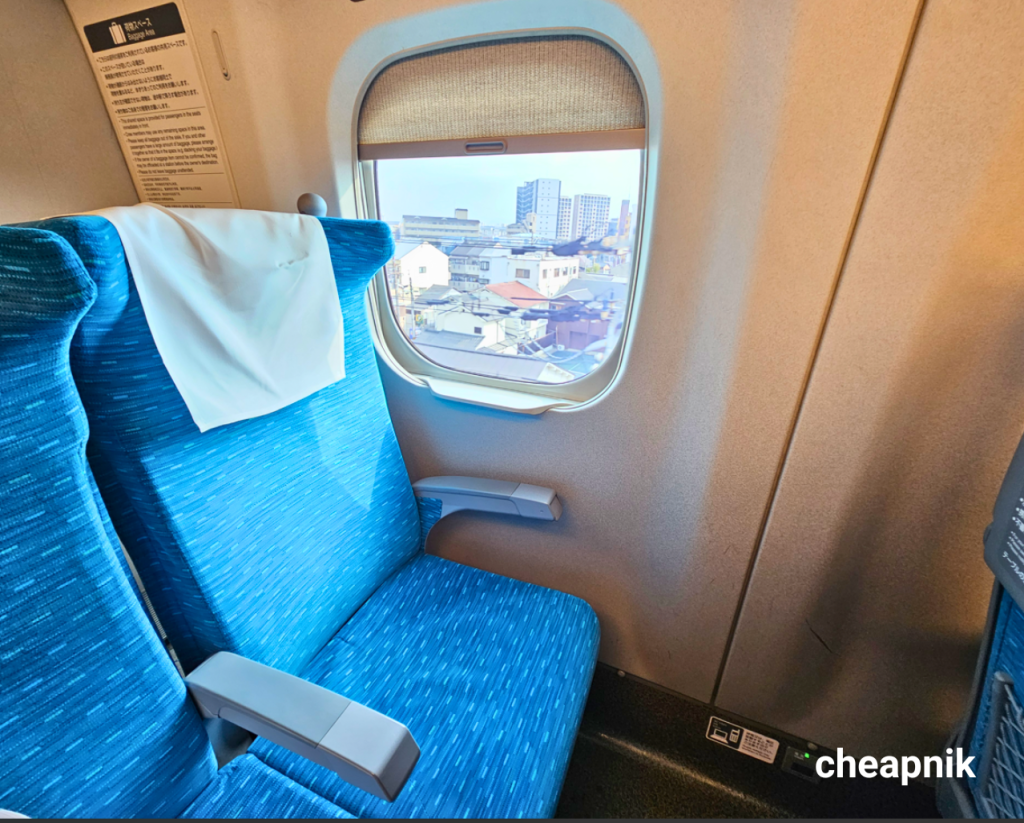
Nobody’s going to fine you for breaking these, but they’re consistent enough across Japan that ignoring them gets you the kind of quiet stares that make a two-hour ride feel longer:
- Keep conversation quiet. Talking with your travel companions is completely normal, just keep the volume down enough that the row behind you isn’t following along.
- Give a heads-up before reclining. A quick glance back, or a quiet “sumimasen,” before you recline is standard courtesy.
- Eating is not just allowed, it’s part of the experience. Ekiben (station bento boxes) are a genuine tradition, buy one before boarding if you haven’t already, more on choosing one in my ekiben guide.
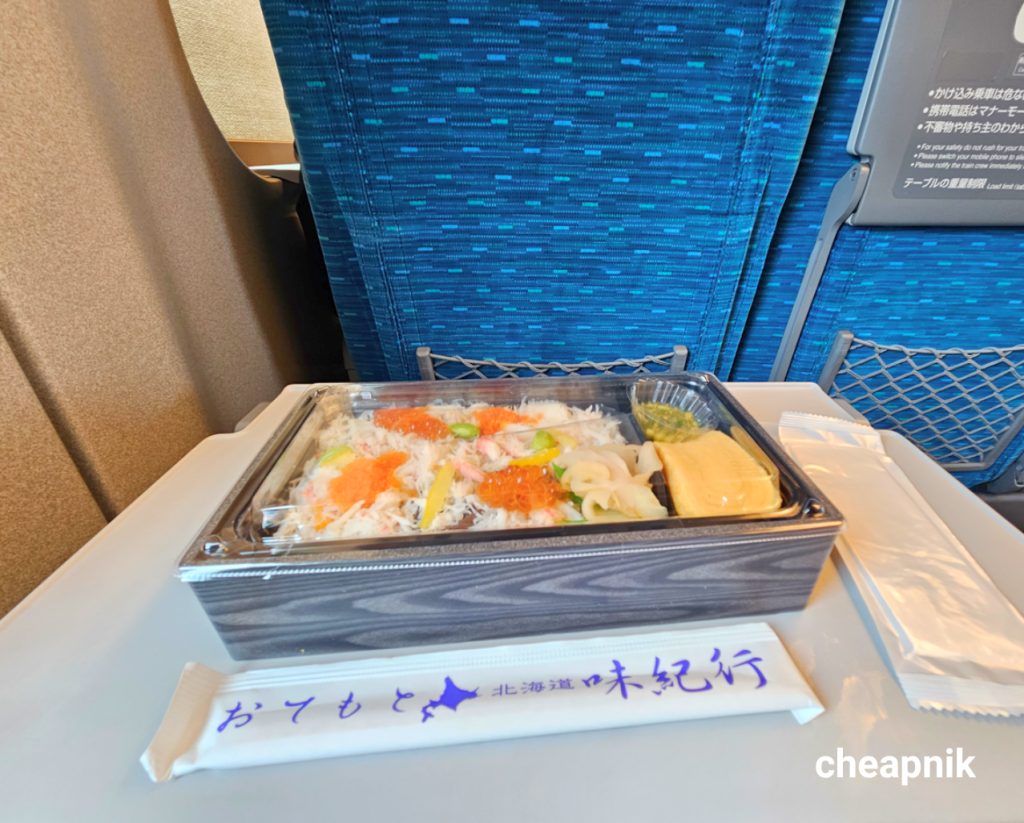
- Take your trash with you. There are no bins at your seat, waste goes in the bins near the deck, not left behind for the next passenger.
- Don’t block the aisle with luggage. Even briefly, it’s one of the more common tourist missteps.
- Phone calls happen in the deck area (the space between cars), not at your seat. Texting is fine anywhere.
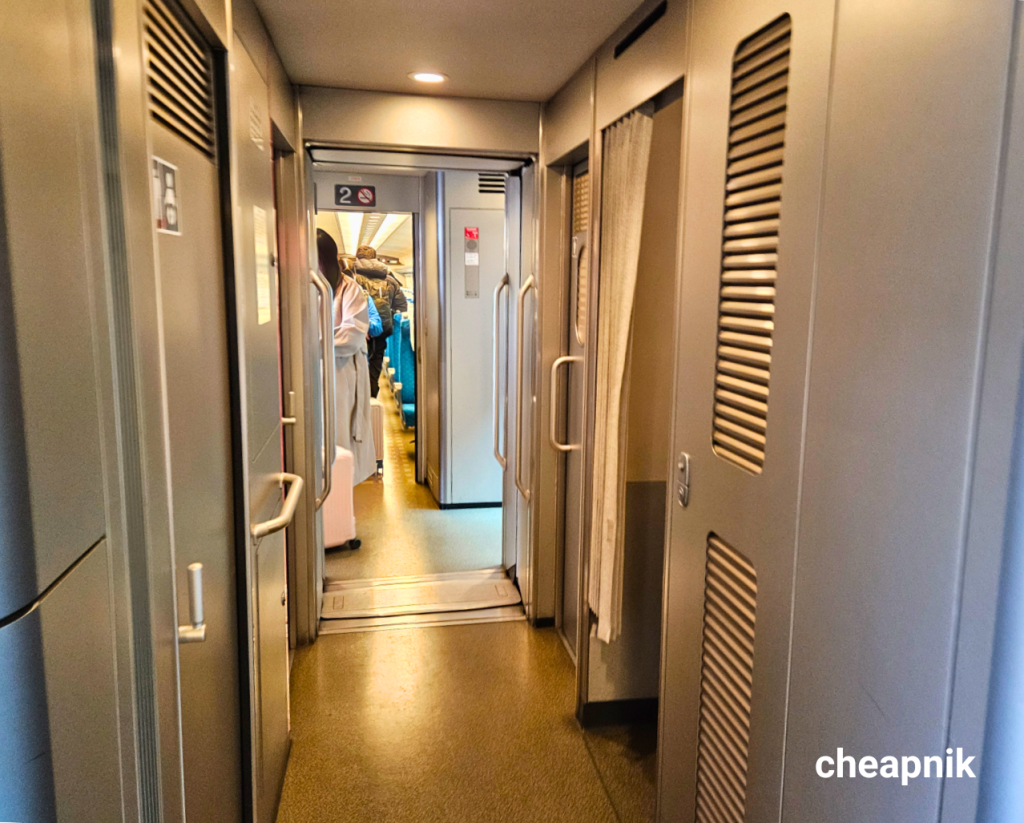
What if you’re running late or miss your train
If you’re holding an unreserved ticket, you’re not locked in, you can board any later train on the same day within your ticket’s route, just in the non-reserved cars. If you’re holding a reserved seat and miss your specific train, you’ll generally need to sort out a replacement at a ticket counter or machine (the same channels covered in my guide to buying Shinkansen tickets), so it’s worth building in that platform buffer especially if you’ve paid for a specific seat.
Quick pre-boarding checklist
- Confirm your departure date and time, destination, train name, number, and car number from your ticket
- Locate your platform on the departure board, checking the color or line grouping if the station splits multiple lines
- Arrive at the platform 10–15 minutes early
- Find your car’s floor marker and join the line behind it
- Let arriving passengers off first, then board quickly and stow luggage as you move
Once you’re in your seat, you might be wondering what the seat next to you, or the fancier car up ahead, actually gets you. My Shinkansen seat classes guide breaks down Ordinary, Green Car, and Gran Class.
Specific platform and train information, and other information can vary by station and train configuration, and may change. Always verify current details, and confirm against the departure board and platform signage on the day of travel.


