

Tokyo to Osaka is the single most-traveled bullet train route in the country, and it’s easy to see why: two of the biggest, most different cities in the country, connected by a train that leaves so often you barely need a schedule. But there are a handful of specifics, station names, train types, seat choices, that genuinely change how smooth your trip is. Here’s the full picture. (This route guide is one piece of my complete Shinkansen guide for first-timers, if you want the bigger picture too.)
The quick facts
- Distance: About 515 km (320 miles) along the Tokaido Shinkansen line.
- Fastest travel time: Around 2 hours 21 to 30 minutes on the Nozomi, depending on the exact train.
- Standard reserved fare: Roughly ¥14,720 for Nozomi (regular season), with unreserved seats running slightly cheaper at around ¥13,870.
- Frequency: Extremely high. Nozomi departs every few minutes during peak hours.
- Stations: Tokyo Station or Shinagawa Station on the Tokyo end, Shin-Osaka Station on the Osaka end.
Everything below unpacks what actually matters in that list.
The station mix-up that catches almost everyone
Here’s the detail that catches almost everyone off guard: unlike the Tokyo-to-Kyoto route which is direct and straightforward (it arrives at Kyoto station literally), for Tokyo-to-Osaka route the Shinkansen doesn’t arrive at “Osaka Station.” It arrives at Shin-Osaka Station, which is a separate hub a few kilometers north of central Osaka.
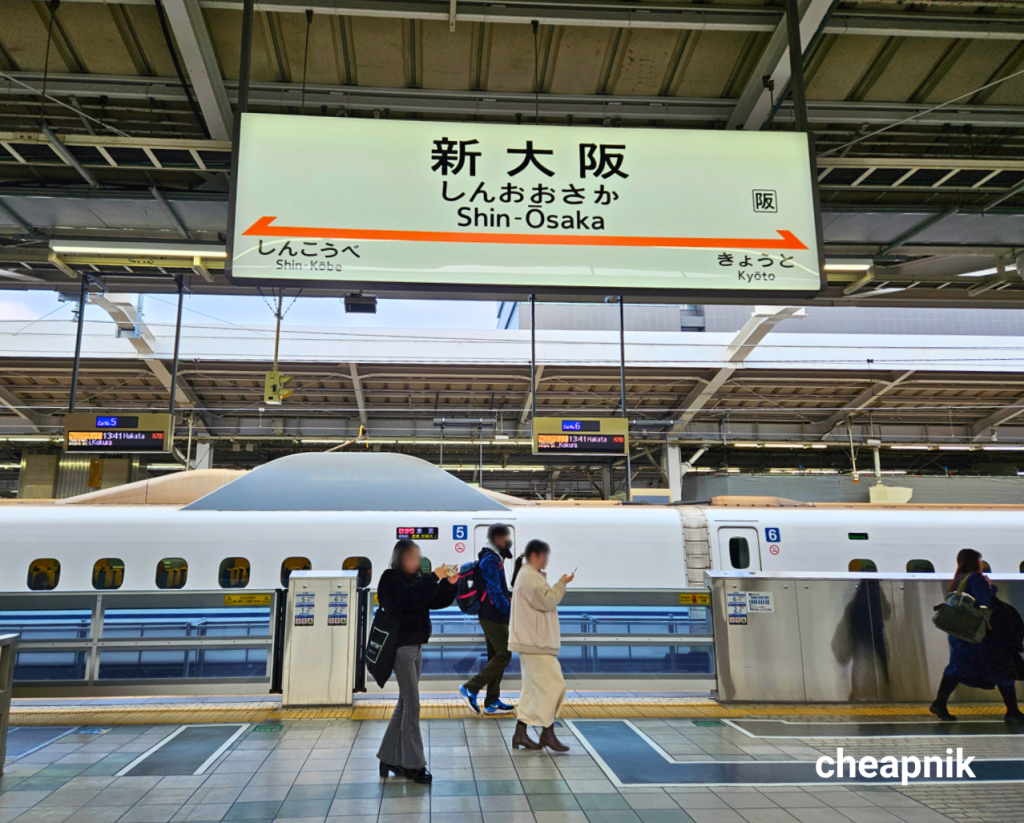
They’re connected, a quick ride on Osaka Metro’s Midosuji subway line gets you into the city center in about 10 to 15 minutes, but if you’re expecting to step off the bullet train directly into Dotonbori or Namba, you’ll need that one extra local transfer first.
On the Tokyo side, you can depart from either Tokyo Station or Shinagawa Station, both served by the same trains. If your hotel is closer to Shinagawa, there’s no need to trek to Tokyo Station first, just check your specific departure.
Choosing your train: Nozomi, Hikari, or Kodama
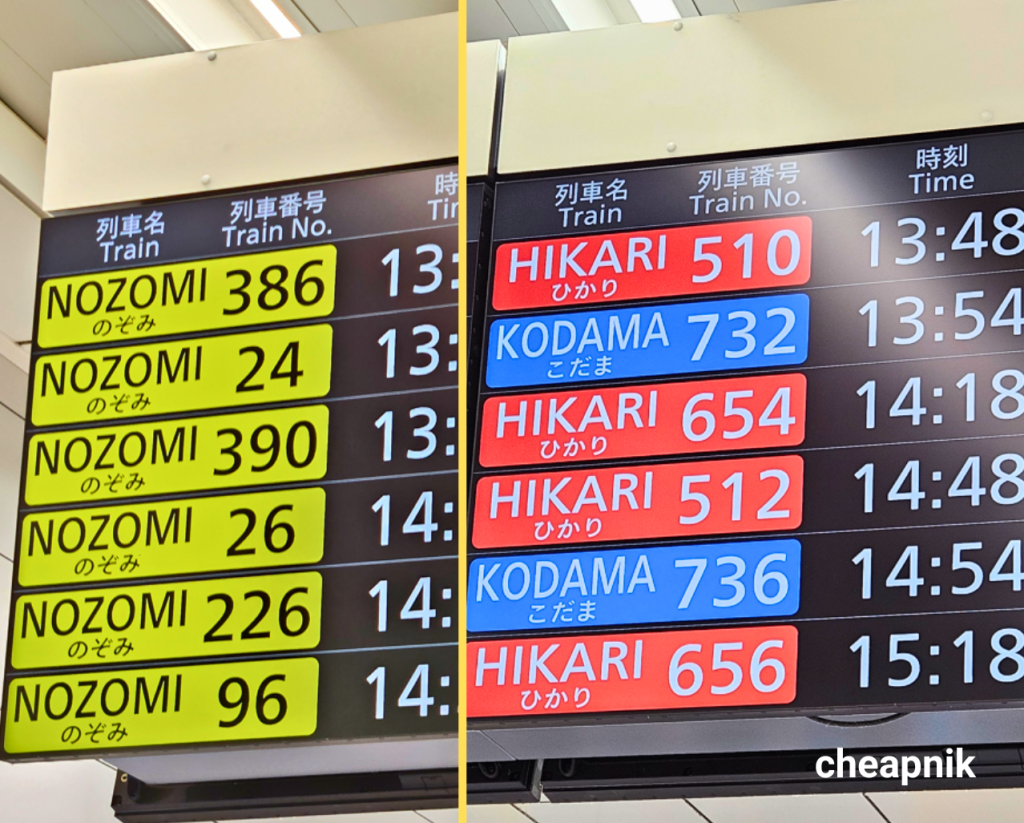
On this route, Nozomi takes about 2.5 hours and isn’t covered by the standard JR Pass, Hikari adds 20 to 30 minutes but rides free with the pass, and Kodama stops at every station and takes close to 4 hours, also free with the pass. Full comparison, including the peak-season rule that limits Nozomi specifically, in my Nozomi vs Hikari vs Kodama guide. For most travelers doing this route once, Hikari is the easy default.
What it actually costs
Fares depend on which train and seat type you choose:
- Nozomi reserved seat: Around ¥14,720
- Nozomi unreserved seat: Around ¥13,870
- Hikari or Kodama reserved seat: Slightly cheaper than Nozomi, typically a few hundred yen less
- Green Car (first class): Roughly ¥19,500–20,500, and worth comparing against Ordinary in my Shinkansen seat classes guide if extra legroom matters to you on a 2.5-hour ride.
The price difference between Nozomi and the slower trains is small enough that, if you’re paying per ticket, speed usually doesn’t cost you much extra. Where the math changes is if you’re using a JR Pass, since Nozomi requires a specific supplement on top of the pass that Hikari and Kodama don’t.
Buying your ticket
Book through SmartEX, a station machine, or Klook/Trip.com if you want an English interface, full comparison in my guide to buying Shinkansen tickets. Book ahead during Golden Week, Obon, or the New Year period, even this frequent a route can sell out on popular departures then, otherwise a few days’ notice is plenty.
Is the JR Pass worth it for this route alone?
Short answer: usually not, if this is the only trip you’re taking. A single Tokyo–Osaka round trip rarely costs more than buying a multi-day JR Pass outright, so the pass makes more sense if you’re also hitting Kyoto, Hiroshima, or further afield in the same window. I’ve laid out the full cost breakdown in my JR Pass guide if you’re weighing that decision.
Getting the Mount Fuji view
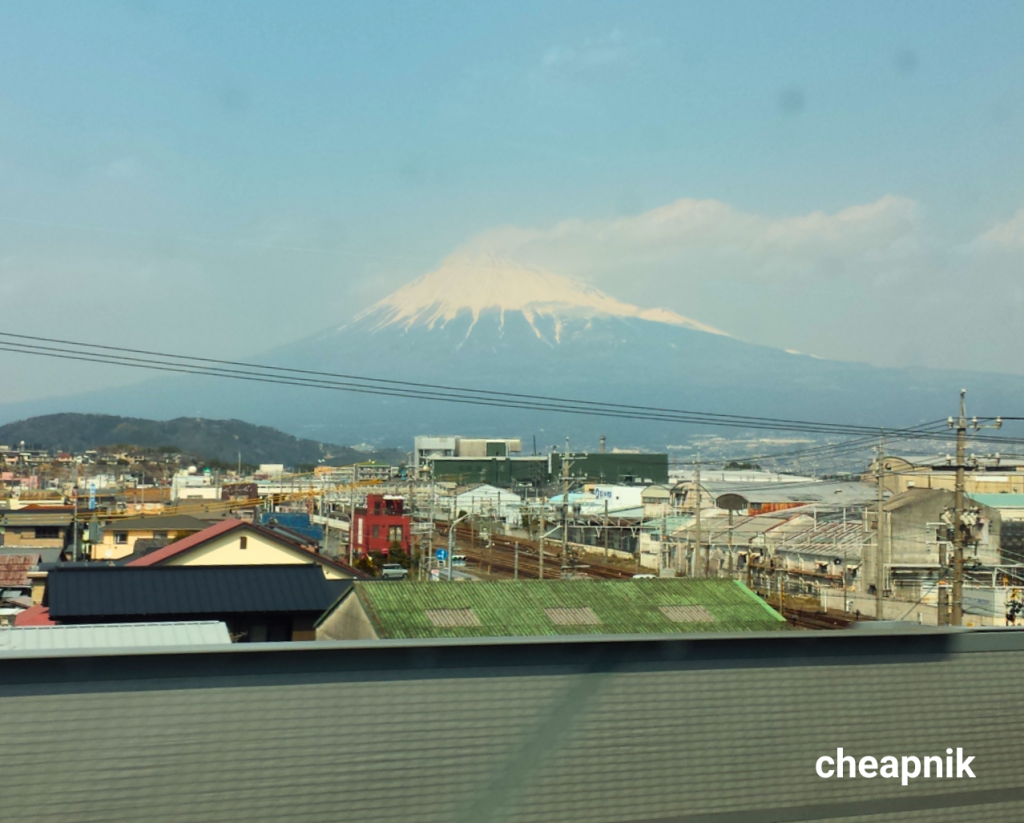
Sit on the right-hand side (seat E in Ordinary Car or Seat D in a Green Car) for a shot at Mount Fuji roughly 40 to 45 minutes in, near Shin-Fuji. Cloud cover is common in summer, so a clear winter morning gives you the best odds, and it’s worth the window seat even if you’d rather nap the rest of the ride.
Timing your trip
The first Nozomi of the day typically departs Tokyo Station around 6:00 AM, and the last train that runs the full route to Shin-Osaka leaves Tokyo around 9:24 PM. If you’re planning a day trip or need to catch a specific connection in Osaka, it’s worth checking the exact schedule for your date rather than assuming trains run all night, they don’t.
Luggage on this route
The 160cm oversized baggage rule applies here too, go over that and you’ll need a reserved luggage seat or face a ¥1,000 penalty at the gate. Full rules in my Shinkansen luggage guide, worth a quick check before you pack.
What to eat on the way
Grab an ekiben before boarding, Tokyo Station’s Ekibenya Matsuri shop is a good place to start, since it stocks regional bento from all over the country, not just Tokyo’s own. More on choosing one in my ekiben guide, it’s a small ritual worth building into the trip.
Key takeaways
Tokyo to Osaka is about as smooth as train travel gets: frequent, fast, and reliable almost to the minute. The only real decision points are which train type fits your budget and pass situation, which station you’re actually arriving at, and whether you want to plan around a Mount Fuji view. Get those three things straight and the rest of the trip takes care of itself.
Once your ticket’s booked, the last question is usually how to actually find your platform and car once you’re at Tokyo Station. My Shinkansen boarding and platform guide covers exactly that.
Prices, travel times, and schedules above are subject to change with seasonal adjustments. Confirm current fares and departure times before booking.


